NFL Touchdown Scorer Betting UK: First, Last and Anytime TD Markets
 Available in US
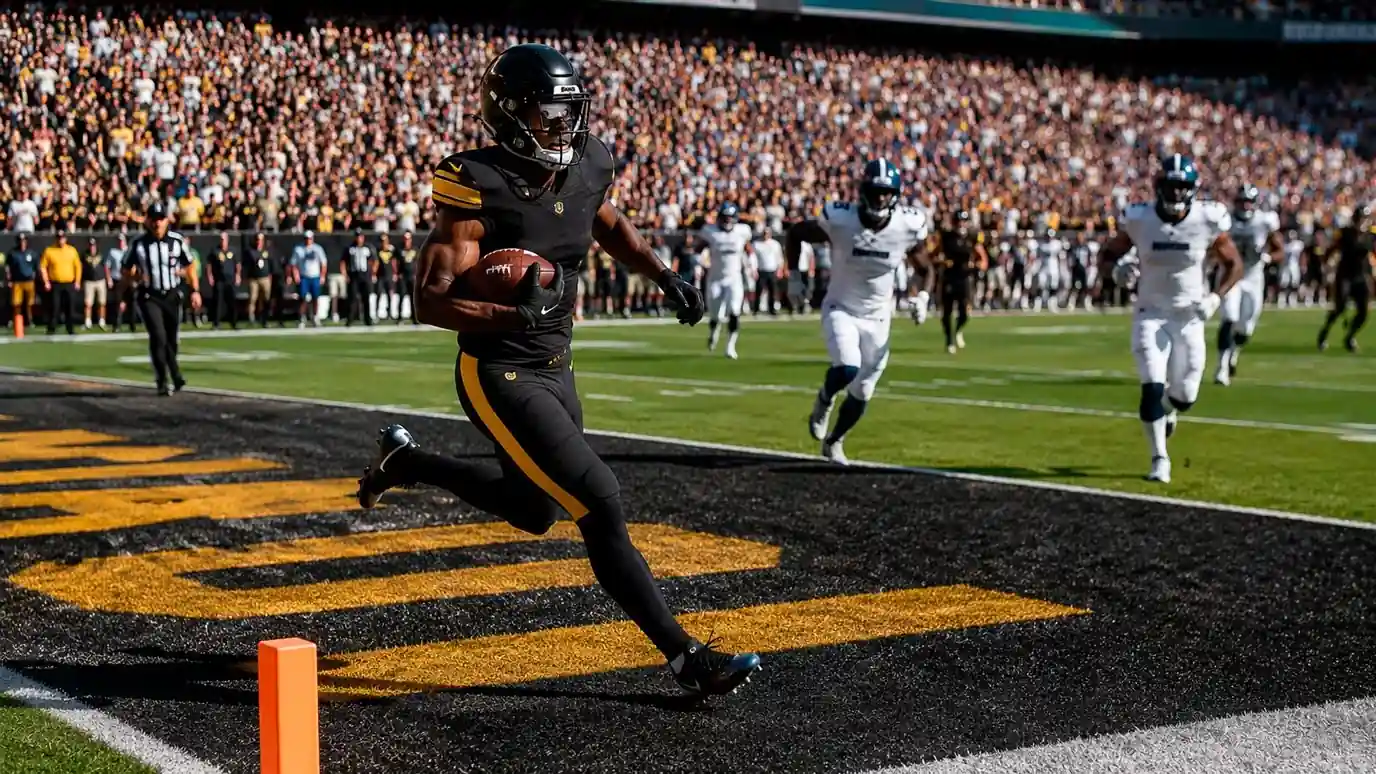
A tight end at 12/1 to score first touchdown. That’s the bet that hooked me on touchdown scorer markets. It was Travis Kelce in a 2023 playoff game, and the opening drive went straight to the red zone where the Chiefs ran their standard play-action look to the tight end in the flat. Touchdown, first drive, first score. The odds reflected his anytime scoring probability, not the very real possibility that Kansas City’s opening script specifically targeted him in the end zone.
Touchdown scorer markets are among the most popular NFL bets at UK sportsbooks, and for good reason — they offer entertainment value on every snap and, with the right approach, genuine analytical edge. The market is built on three variants: first touchdown scorer, last touchdown scorer, and anytime touchdown scorer. Each has different dynamics, different pricing logic, and different paths to profit. Roughly 47% of British gamblers prefer sports betting over other formats, and touchdown scorer markets are where a huge share of that recreational money lands every NFL Sunday.
First Touchdown Scorer: Scripted Plays and Opening Drives
First touchdown scorer is the most volatile and the most exploitable of the three markets. The odds are inflated because there’s only one winner per game and dozens of eligible players. A running back who scores 50% of his team’s touchdowns might be priced at 8/1 for first TD because the market accounts for the probability that the other team scores first, that the first score is a field goal, or that a different player on his own team reaches the end zone before he does.
My edge comes from studying opening drive tendencies. NFL teams script their first 10-15 plays before the game — the coaches design a specific sequence intended to establish tempo and exploit what they’ve seen on film. Some teams consistently target their number one receiver on the opening drive. Others feature their goal-line running back if they expect to reach the red zone early. Reviewing a team’s first-drive touchdown patterns across a season reveals which players are most likely to score first when the team does reach the end zone on their opening possession.
Game context matters enormously. If a strong offensive team is playing a weak defensive team, the probability of the favoured offence scoring first increases. If that offence receives the opening kickoff, even better. I track coin toss tendencies (some coaches always defer, others always receive) and historical first-drive scoring rates to build a composite picture of who is most likely to score the game’s first touchdown. It’s not a precise science, but it’s considerably more informed than picking a name because the odds look nice.
Anytime Touchdown Scorer: Volume and Red Zone Roles
Last season I ran a simple experiment: I backed the same five players at anytime touchdown scorer across every game they played for a 10-week stretch. Three running backs with heavy goal-line usage and two high-volume red zone receivers. The results were illuminating — the goal-line backs scored in 65% of their games, and the red zone receivers scored in roughly 55% of theirs. At average odds of 2/1 for the backs and 5/2 for the receivers, the running backs produced a small profit and the receivers broke even.
Anytime touchdown scorer pricing is driven by historical scoring rate and adjusted for matchup. A player who has scored in 8 of 12 games will be shorter than one who has scored in 4 of 12, regardless of the defensive matchup. The market’s weakness is that it doesn’t always differentiate between players who score through volume (many red zone touches) versus players who score through efficiency (fewer touches but higher conversion). A running back who gets 6 red zone carries per game is far more likely to score anytime than a receiver who gets 2 red zone targets, even if their season-long touchdown numbers are identical.
Red zone target share and red zone rushing attempts are the two stats that matter most for anytime bets. A player who accounts for 30% or more of his team’s red zone touches is the dominant scoring threat, and his anytime price should reflect that dominance. When the market prices him based on overall scoring rate (which includes games where he was injured mid-game, or where his team didn’t reach the red zone often), the implied probability is lower than his true scoring likelihood in a game where his team is expected to score multiple touchdowns.
Last Touchdown Scorer: The Forgotten Market
I find it fascinating that the last touchdown scorer market gets so little attention from analytical bettors. The pricing structure is virtually identical to first touchdown scorer — the same player at roughly the same odds — but the underlying dynamics are completely different. First touchdown scorer depends on opening scripts and offensive aggression. Last touchdown scorer depends on game script, clock management, and which team is trailing.
In close games, the last touchdown is typically scored by the trailing team’s primary offensive weapon. A team down by four points with two minutes remaining is running hurry-up offence, targeting their best playmaker, and trying to reach the end zone as quickly as possible. The player who gets the plurality of targets in those desperate situations — usually the number one receiver — has a disproportionate chance of scoring the last touchdown.
In blowouts, the last touchdown is often scored by a backup running back or a reserve player who enters the game in garbage time. This makes last touchdown scorer inherently difficult to predict in lopsided matchups. My approach is to focus on games projected to be close (spread of three points or fewer) and identify the primary late-game weapons for both teams. The 16.6 million bets placed on Super Bowl LIX through FanDuel alone illustrate the enormous appetite for touchdown scorer markets during marquee games, where the last TD market becomes especially liquid and competitive. For additional angles on combining touchdown scorers with other selections, the same game multi guide explains how correlating TD picks with spreads and totals can build more structured in-game combinations.
Defensive and Special Teams Touchdowns: High Odds, Low Frequency
Every so often, a defensive player scores a pick-six or a return man takes a kickoff to the house, and anyone holding that player’s first or anytime touchdown scorer ticket celebrates wildly. These scores happen in roughly 20% of NFL games across a season, but predicting which game and which player is effectively impossible.
Some sportsbooks offer “any defensive or special teams touchdown” as a yes/no market, typically priced around 3/1 to 4/1. At that price, the bet is close to fair value given the approximately 20% per-game occurrence rate. I occasionally take this market as a standalone bet when two aggressive defences with high interception rates meet, but I don’t include it in regular betting strategy. It’s a supplementary market with entertainment value rather than a consistent edge.
What I do watch for is the impact of defensive touchdowns on live betting. When a pick-six or fumble return scores in the first half, the live total and live spread both overreact. The scoring event didn’t reflect the offence’s ability to score — it was a defensive play that created points independent of the offensive matchup. If the game’s fundamentals haven’t changed and the total has dropped by four points because of a non-offensive score, the live over becomes attractive.
What is the difference between first and anytime touchdown scorer bets?
First touchdown scorer pays out only if your selected player scores the very first touchdown of the game. Anytime touchdown scorer pays out if the player scores at any point during the match, regardless of when. First TD odds are higher because only one player can win, while anytime odds are lower because the player has the entire game to find the end zone.
Which players are best for anytime touchdown scorer bets?
Players with the highest red zone volume offer the most consistent value. Goal-line running backs who receive a large share of carries inside the opponent’s 10-yard line and primary red zone receiving targets are the strongest candidates. Red zone target share and red zone rushing attempts per game are the two statistics to track when evaluating anytime TD scorer bets.
Published by the Online Sports Betting nfl team.