NFL Prop Bets Guide UK: Player Props, Game Props and Exotics
 Available in US

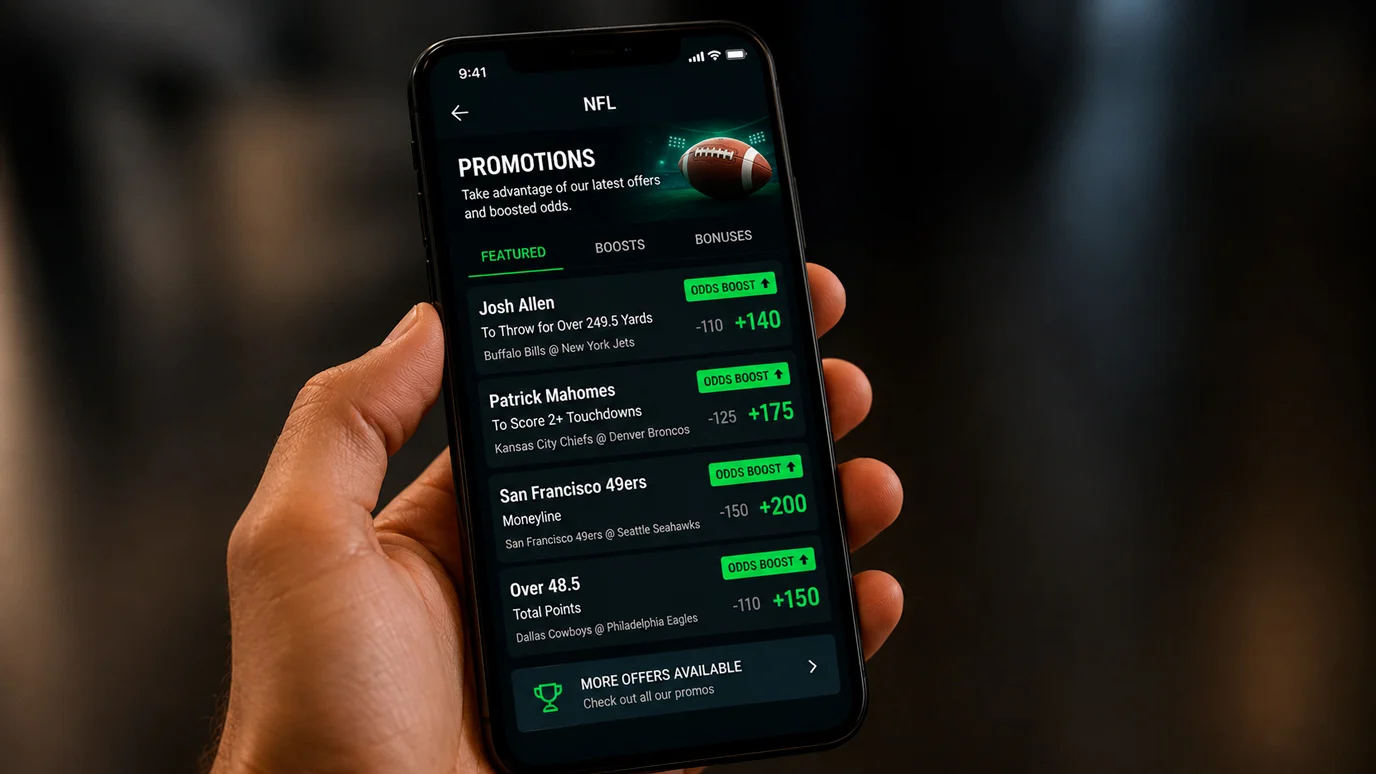
The first time I placed an NFL prop bet, it was on the number of passing yards for Patrick Mahomes in a Sunday night game. I had done no research on the opposing secondary, no analysis of weather conditions, and no review of Mahomes’ recent performance splits. I picked a round number that “felt right.” Naturally, it lost. What struck me afterwards was how many data points I could have used to make that bet sharply rather than lazily — and how few bettors in the UK bother to do so.
Proposition bets — props — are wagers on specific events within a game that do not directly depend on the final score. Will a particular quarterback throw over 275.5 yards? Will the first score be a touchdown or a field goal? Will the halftime show run longer than 14 minutes? Props range from analytically rigorous to purely entertainment, and the market has exploded. Around 290 million online bets are placed monthly in the UK across all sports, and props represent a rapidly growing share of that volume during NFL season.
Player Props: Passing, Rushing, and Receiving Markets
Player props are where the analytical edge in NFL betting is widest, because bookmakers cannot devote the same pricing resources to hundreds of individual player markets as they do to three core game lines.
Passing props dominate the category. Quarterback passing yards, passing touchdowns, interceptions, completions, and longest completion are standard at most UK sportsbooks during the NFL season. The over/under on passing yards is the most liquid player prop market — the line is typically set based on the quarterback’s season average adjusted for the opponent’s pass defence ranking, but those adjustments are often crude.
Where I find value is in the context the line does not fully price. A quarterback facing a defence that ranks middle-of-the-pack against the pass but has just lost its top cornerback to injury will throw more effectively than the seasonal average suggests. Game script matters enormously: if the opposing offence is elite, the quarterback’s team is likely to trail early and pass more, inflating yardage. A team with a 24-point lead in the fourth quarter does not keep throwing — it runs the clock.
Rushing props cover running back carries, rushing yards, and rushing touchdowns. Wide receiver and tight end receiving props include receptions, receiving yards, and anytime touchdown scorer. The anytime touchdown market is particularly popular with UK bettors because it mirrors the “anytime goalscorer” market familiar from football betting — you are simply backing a player to score at any point in the game.
The pricing on anytime touchdown props tends to be less efficient than yardage markets because the outcome is more volatile. A running back who averages 0.6 touchdowns per game might score in 60% of games but fail to find the end zone in 40% despite heavy usage. That variance creates frequent mispricings, especially when the bookmaker leans too heavily on season-long averages without adjusting for red zone opportunity data.
Game Props: Scoring, Quarters, and Drives
Game props detach from individual players and focus on match-level events. First scoring method (touchdown, field goal, safety) is a standard offering. Total touchdowns scored, total field goals, and first-half/second-half scoring lines add layers of granularity beyond the game total.
Quarter-by-quarter betting is where game props get genuinely interesting for informed bettors. NFL scoring is not evenly distributed across quarters. League-wide data consistently shows that third quarters produce fewer points than second and fourth quarters, partly because teams receive halftime adjustments from coaching staffs and partly because the two-minute drill inflates late-half scoring. Betting the first-quarter under on a game between two slow-starting teams is a data-backed approach that casual bettors overlook.
Drive-based props — total punts, total turnovers, longest drive — are available at some UK sportsbooks but with wider margins. These markets are harder to price because they depend on game flow variables that models struggle to predict. I approach drive props cautiously and only bet them when I have a strong view on pace of play or turnover tendencies that the line has not captured.
Novelty and Entertainment Props
Super Bowl prop markets are where novelty betting reaches its peak. Coin toss result, national anthem duration, colour of the Gatorade shower — these are pure entertainment wagers with zero analytical edge. Macquarie Equity Research noted after Super Bowl LIX that same-game parlays and prop bets were a slight positive for sportsbooks despite the main result going against them, which tells you where the margin sits on these markets.
I do not bet novelty props, and I would not recommend them as anything other than a social activity with very small stakes. The margins are wide, the outcomes are genuinely random, and the entertainment value comes from the communal experience of watching the event rather than from the bet itself. If you enjoy placing a two-pound bet on the coin toss at a Super Bowl party, that is a form of entertainment spending, not a betting strategy.
Where novelty props become analytically interesting is at the boundary with game props. “Will there be a safety?” is technically a novelty prop but can be analysed through offensive line quality, opposing pass rush, and red zone tendencies. “Will either team score 50+ points?” sounds exotic but is assessable through historical blowout frequencies and the specific matchup’s power rating differential. The line between novelty and analysis is blurrier than the categories suggest.
Finding Value in NFL Props
The structural advantage for prop bettors is information asymmetry. The bookmaker sets hundreds of prop lines per NFL game, and each line receives a fraction of the pricing attention that the main moneyline, spread, and total receive. A bettor who specialises in a narrow prop category — say, quarterback passing yards for a handful of teams — can develop deeper knowledge than the linemaker on those specific markets.
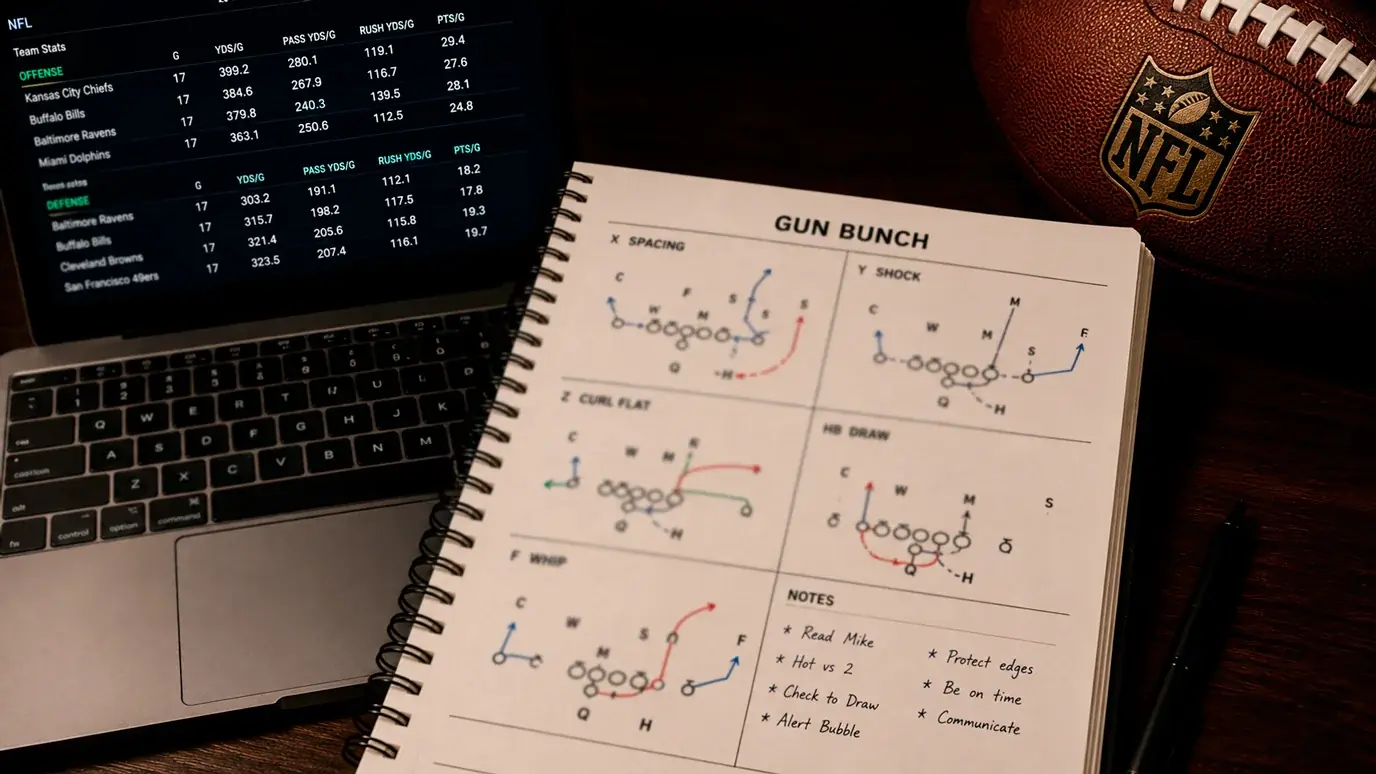
My process starts with identifying the key variable for each prop. For passing yards, it is usually the opponent’s secondary health and the projected game script. For rushing yards, it is defensive front quality and the game’s expected pace. For touchdowns, it is red zone efficiency — both the player’s opportunity rate and the team’s conversion percentage.
I then compare my projected number against the line. If the gap is large enough to overcome the bookmaker’s margin (typically 8-12% on props), I have a bet. If the gap is marginal, I pass. Discipline is everything in prop betting because the volume of available markets creates a constant temptation to bet on “interesting” lines rather than valuable ones.
One practical tip: track your prop bets separately from your game bets. Over a full NFL season, this gives you data on which prop categories you have a genuine edge in and which ones you are betting for entertainment. My own records show a consistent edge on quarterback passing yards (where I invest the most research time) and a consistent loss on touchdown scorer props (where I was clearly betting on gut feeling rather than analysis). That kind of self-knowledge is worth more than any single winning bet.
What are the best NFL prop bets to place?
The prop markets with the thinnest bookmaker margins and the most data available for analysis are quarterback passing yards and team totals by half. Player touchdown scorer props are popular but carry wider margins and higher variance. The best prop bet for any individual is the one where they have done the most research and identified a gap between their projection and the bookmaker’s line.
Do UK bookmakers offer player props for every NFL game?
During the regular season, the major UKGC-licensed sportsbooks offer player props for all scheduled NFL games, though the depth of markets varies. Marquee Sunday and Monday night games typically have the widest prop selection, while Thursday Night Football and early-season fixtures may have fewer options. Preseason games rarely have player prop markets at UK operators.
Written by the editors at Online Sports Betting nfl.