Super Bowl Prop Bets Guide UK: Player Props, Novelty Markets and Scoring Specials
 Available in US
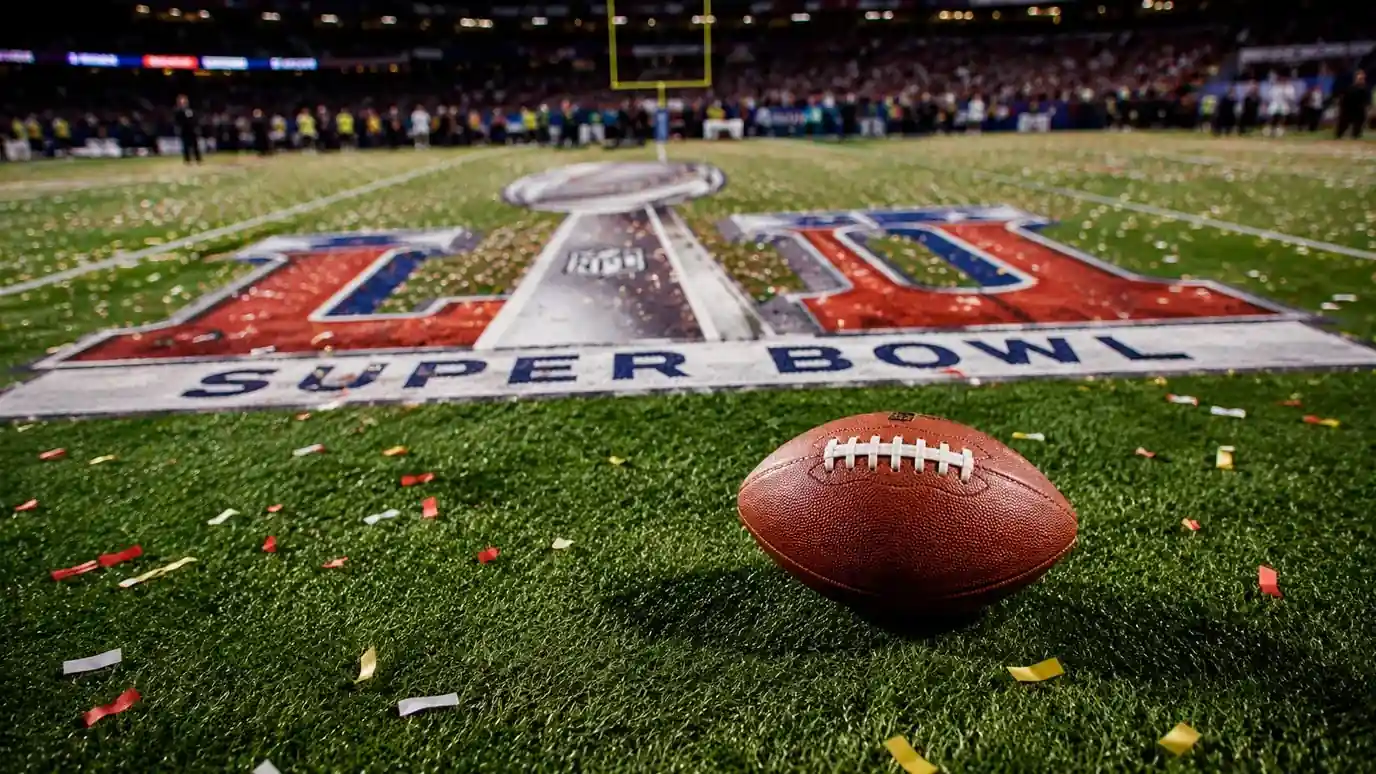
Super Bowl Sunday 2025 was the first time I placed a prop bet on the length of the national anthem. I’m not proud of it, and I didn’t win. But it illustrated something important about the Super Bowl betting market: it’s the one day each year where the boundary between serious analysis and pure entertainment dissolves completely. You can place a rigorously researched player prop and a coin-toss bet on the same slip, and both are available at your local UK sportsbook.
The Super Bowl generates betting volume that dwarfs any other single sporting event. FanDuel processed 16.6 million individual bets on Super Bowl LIX alone, and UK operators see their busiest single-day NFL handle of the year. What makes the Super Bowl unique for prop betting is depth — major UK sportsbooks list anywhere from 200 to 400 individual prop markets for the big game, compared to 40-60 for a typical regular-season match. This depth creates inefficiency because no sportsbook can price 400 markets as tightly as it prices 40.
Player Performance Props: Where the Edge Lives
I’ve tracked my Super Bowl prop betting results across the last four years, and player performance props have been my most profitable category by a significant margin. These markets — quarterback passing yards, receiver receptions, running back rushing yards — are set using season averages and adjusted for the specific matchup. The adjustment is where the value hides.
Sportsbooks adjust player lines based on the opposing defence’s season-long statistics, but the Super Bowl matchup often features scheme-specific dynamics that season averages don’t capture. A receiver who averaged 75 yards per game during the season might face a defence that allows the fewest yards to outside receivers but is vulnerable to slot receivers. If that player lines up in the slot 40% of the time, his yardage total should account for the defence’s slot-specific weakness, not their overall numbers. Most Super Bowl prop lines don’t make this distinction.
Quarterback props are the most heavily bet and therefore the most efficiently priced. I’ve found more value in secondary player props — the second or third receiving option, the pass-catching running back, the tight end in a two-tight-end scheme. These players receive less public attention, which means the sportsbook faces less market pressure to sharpen their lines. A tight end’s reception total at 3.5 might be set correctly based on his season average, but if the opposing defence is missing their primary slot cornerback and the tight end will face a linebacker in coverage, the over becomes significantly more attractive.
Scoring Props and Touchdown Specials
Every Super Bowl prop menu includes a section dedicated to scoring: first touchdown scorer, anytime touchdown scorer, total touchdowns in the game, and team-specific scoring props like “first team to score” and “team to score last.” Macquarie Equity Research noted after Super Bowl LIX that same-game parlays and prop combinations drove record handle on the event — bettors aren’t just picking individual props anymore, they’re combining them into multi-leg wagers that amplify both risk and potential return.
First touchdown scorer in the Super Bowl deserves special attention because the market dynamics are amplified compared to regular-season games. The opening drive of the Super Bowl is the most heavily scripted sequence of the entire NFL season. Both coaches have had two weeks to prepare, and the opening script reflects their most creative, most practised play designs. Identifying which player each offence is targeting on their opening script — through coaching interviews, practice reports, and historical tendencies in big games — gives you a genuine edge over a market that prices first TD scorer based primarily on season-long scoring rates.
The “no touchdown in the first quarter” market is a quiet favourite of mine. Super Bowl first quarters tend to be conservative, with both teams feeling out the opponent’s gameplan before committing to aggressive play-calling. First-quarter scoring in the Super Bowl averages lower than in regular-season games, and the yes price on “no first-quarter touchdown” is typically around 5/4 to 7/4 depending on the matchup. It’s a small edge, but it’s been consistent across enough Super Bowls to be part of my annual prop strategy.
Novelty and Entertainment Props
Coin toss, national anthem length, colour of the Gatorade shower, first coach’s challenge — these markets exist purely for entertainment and carry margins that would make a casino blush. The coin toss is a genuine 50/50 proposition, yet the market prices both sides at odds that imply a combined probability above 105%, giving the sportsbook a built-in edge regardless of the outcome. I mention this not to discourage anyone from having fun with novelty props — the Super Bowl is, above all, an entertainment event — but to set expectations about where your money is going.
Halftime show props occupy a middle ground between entertainment and analysis. The length of the halftime performance, the number of songs played, and whether a guest performer will appear are markets where a small amount of research (previous halftime show durations, the performing artist’s typical setlist length, leaked rehearsal information) can produce an informed opinion. These markets carry wide margins but are also priced lazily because the sportsbook knows most bettors are placing them for fun rather than profit.
My rule is simple: allocate no more than 5% of your Super Bowl betting budget to novelty props. Treat them as the entertainment tax for participating in the biggest single betting day of the year. The other 95% goes to player performance props and scoring markets where analytical work produces genuine edge.
Building a Super Bowl Prop Portfolio
I approach Super Bowl props as a portfolio, not a collection of individual bets. The goal is to construct a set of 10-15 prop wagers that, taken together, have a positive expected value even though individual props carry uncertainty. Diversification across prop types — a few player yardage overs, a couple of touchdown scorer bets, a scoring prop, and one or two matchup-specific plays — reduces the impact of any single bad outcome.
Timing matters for Super Bowl props. Lines open roughly two weeks before the game and move significantly during that window. Sharp bettors target player props early in the fortnight, before the market absorbs the full weight of public opinion and media analysis. By game day, the most popular player props have been bet into efficiency by thousands of wagers. The less popular props — backup running back rushing yards, defensive player tackle totals, team penalty yardage — move less and retain more value through to kickoff. For a broader look at structuring multi-selection wagers around these markets, the parlay and accumulator guide covers the mathematical framework for combining correlated Super Bowl props.
UK-Specific Timing and Market Access
The Super Bowl kicks off between 11:00 pm and 11:30 pm UK time, which creates a unique betting environment for British punters. You’re placing prop bets late on a Sunday evening, and the game doesn’t end until around 3:00 am Monday morning. This timing means that the UK betting public is smaller and less active than the American market, and some prop lines at UK sportsbooks receive less volume than they would if the game kicked off at a more convenient hour.
Less volume can mean wider margins — the sportsbook compensates for lower liquidity by building in more protection. But it also means that your individual bet has a larger impact on the line. If you spot a mispriced prop at a UK book, the line is less likely to have been corrected by sharp volume than the same prop at a major American sportsbook. The 10% of UK adults who bet online quarterly include a core of dedicated NFL fans who treat the Super Bowl as the culmination of a season-long betting strategy, and those bettors have a genuine structural advantage in the late-night UK market where competition for value is thinner.
How many prop bets are available for the Super Bowl at UK sportsbooks?
Major UK sportsbooks typically offer between 200 and 400 individual prop markets for the Super Bowl, compared to 40-60 for a standard regular-season game. These cover player performance (passing, rushing, receiving yards), scoring markets (first TD, anytime TD, quarter scoring), and novelty props (coin toss, anthem length, halftime show). Market depth varies by operator.
Are Super Bowl novelty bets worth placing?
Novelty props like the coin toss and Gatorade colour carry wide margins that favour the sportsbook and offer no analytical edge. They’re entertainment bets best treated as a small percentage of your Super Bowl budget. Player performance props and scoring markets offer significantly better value because research and matchup analysis can identify mispriced lines.
Written by the editors at Online Sports Betting nfl.