NFL Live Betting UK: In-Play Markets, Timing and Real-Time Strategy
 Available in US
The best in-play bet I ever placed was on a team that had just gone down 17-0 in the first quarter. Everyone panicked. The live spread ballooned to +20.5 on the trailing team, and the moneyline drifted to 15/1. I’d watched the opening quarter closely — the deficit came from two turnovers deep in their own territory, not from being outplayed. Their offensive drives before the turnovers looked sharp. I backed the +20.5 spread and the game finished 31-28. Not only did the trailing team cover the live spread, they nearly won outright.
Live betting — placing wagers while a game is in progress — has reshaped how I approach NFL Sundays. It accounts for 62% of betting revenue across the UK market, and in NFL specifically, the live markets often contain more value than the pre-match lines. The reason is simple: pre-match lines have been analysed and bet into efficiency by thousands of sharp bettors over the course of a week. Live lines react to events in real time, and the sportsbook’s algorithm doesn’t always interpret those events correctly. A fumble on the second play of the game doesn’t tell you anything about which team is better. But the live spread moves as if it does.
How NFL In-Play Markets Work at UK Sportsbooks
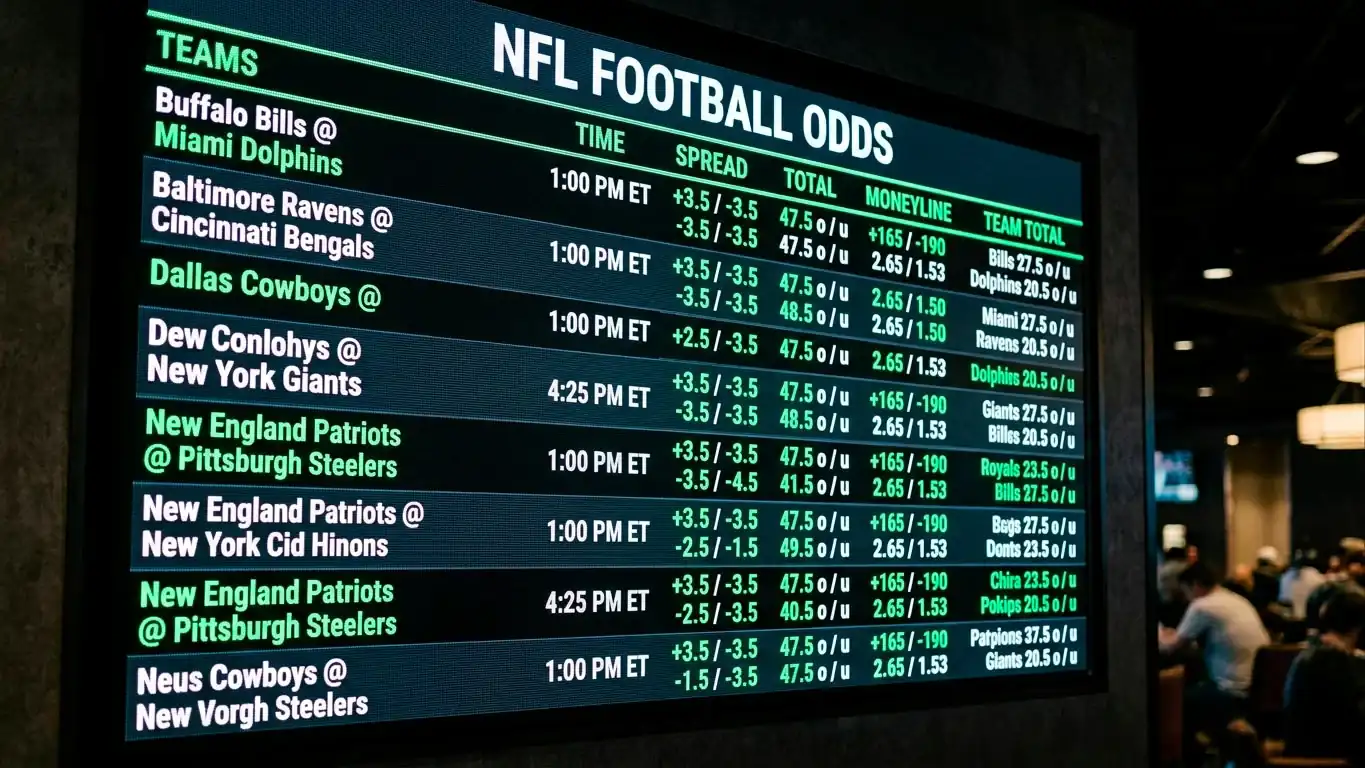
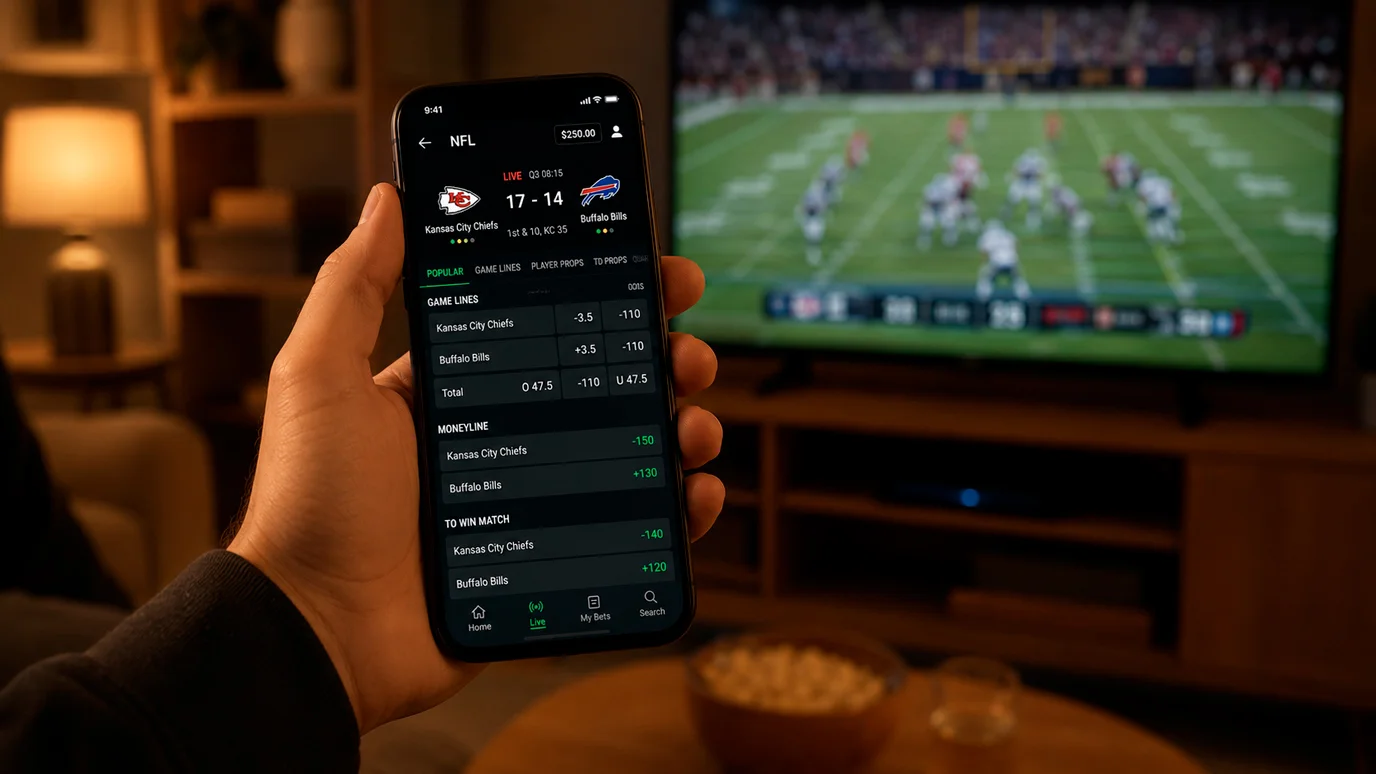
UK sportsbooks offer a comprehensive suite of in-play NFL markets that update throughout the game. The core markets — live spread, live moneyline, and live total — adjust after every significant play. A touchdown, turnover, or field goal triggers an immediate recalculation of odds. Between plays, the lines hold steady unless the game clock is running during a drive (some operators update continuously during possessions, others wait for stoppages).
Beyond the big three, most operators offer live quarter and half betting — you can wager on which team will win the current quarter, the next quarter, or the second half as a standalone market. These sub-game markets are where experienced in-play bettors find the juiciest edges because the sportsbook’s modelling for quarter-by-quarter outcomes is less refined than its full-game pricing. A team trailing 14-0 at the end of the first quarter might be 1/2 to win the second quarter — reasonable on paper, but if the trailing team has already adjusted their offensive scheme and the leading team tends to go conservative with a lead, the trailing side at evens or better for the second quarter represents genuine value.
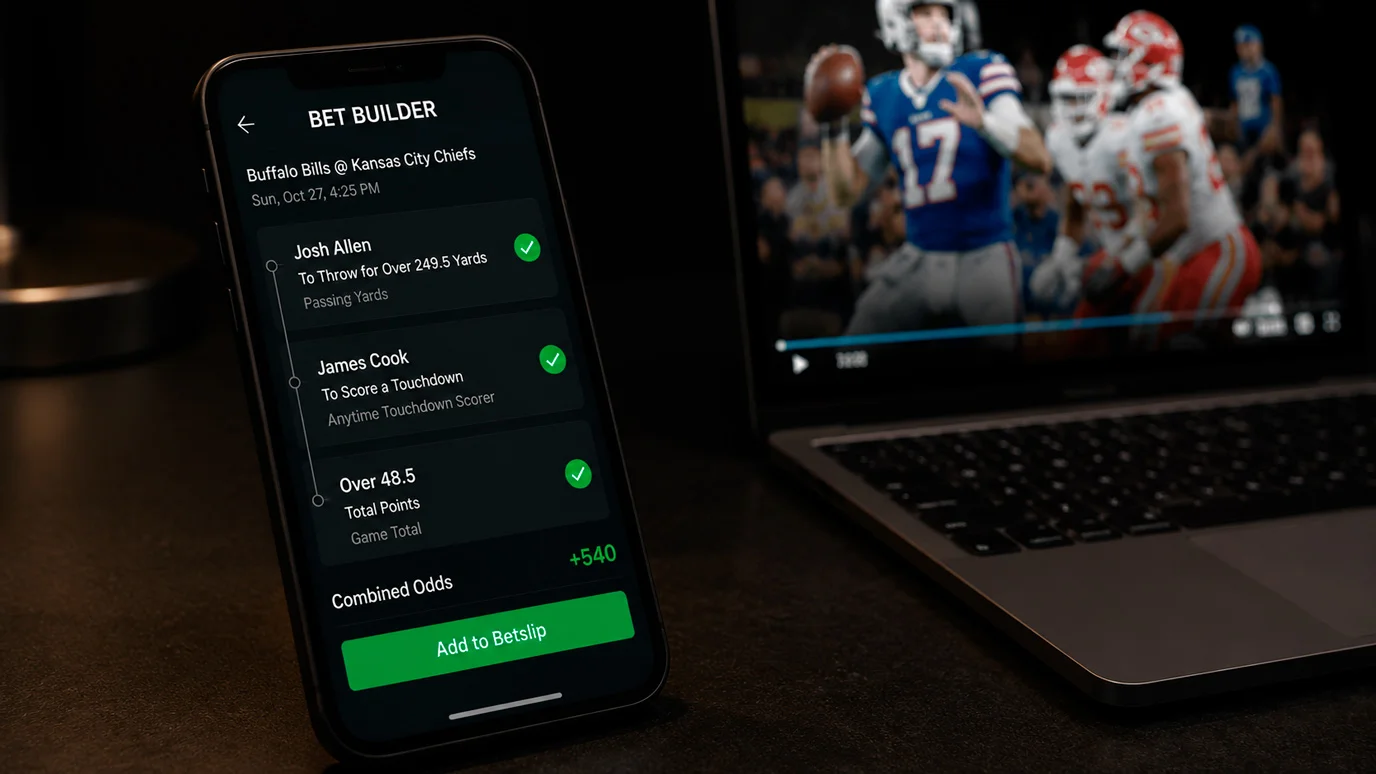
Player prop markets are increasingly available in-play at UK books. A quarterback’s passing yards total adjusts based on his first-half output, and if he’s on pace for 350 yards but the bookmaker has only recalculated to 290.5, you’re being handed an edge. The lag in player prop updates during fast-moving games is one of the most exploitable features of the in-play market.
Timing Your Bets Around Game Flow
The single most profitable in-play strategy I’ve used across three full NFL seasons is betting against overreaction to early scoring. NFL games are four quarters long, and what happens in the first quarter is a poor predictor of the final score. Teams that trail by 14 or more points in the first quarter go on to cover the original pre-match spread at a rate that would surprise most bettors. The live market treats early deficits as more meaningful than they are.
Halftime is the second major value window. Sportsbooks set second-half lines that are roughly half of the original full-game spread, adjusted for the first-half result. But the halftime adjustment often undersells the trailing team’s ability to regroup. NFL coaches are elite at making halftime adjustments — scheme changes, personnel rotations, and tempo shifts that address first-half problems. The 14.3 million NFL followers in the UK have plenty of experience watching first-half blowouts turn into second-half thrillers. Betting the second-half spread on trailing teams in games where the first-half deficit came from fixable issues (turnovers, a single big play) rather than systemic domination is a repeatable strategy.
Two-minute warning situations in the fourth quarter create a final window. The live total adjusts dynamically in the final two minutes, and a team trailing by eight or more will use hurry-up offence that compresses possessions into short time windows. The over becomes more attractive in these situations because the trailing team abandons the run entirely, the clock stops on incompletions and out-of-bounds plays, and the defence risks giving up big plays to avoid allowing a game-tying drive. The pace of scoring in the final two minutes of close games is roughly double the per-minute rate from the rest of the game.
Reading the Action Before Placing Your Bet
Live betting without watching the game is reckless. Numbers on a scoreboard don’t tell you why they’re there. I had a mate who backed a team live because they were up 10-0 and the live price on them was 4/5 — looked like easy value. He wasn’t watching. Those 10 points came from a pick-six and a short-field field goal after a muffed punt. The team’s offence hadn’t moved the ball past midfield on any of their drives. They eventually lost 24-13.
When I’m betting in-play, I watch for specific signals that the scoreboard doesn’t capture. Offensive line play is the most important — is the quarterback getting clean pockets, or is he running for his life? A team moving the ball efficiently but settling for field goals due to red zone mistakes is more likely to correct course than a team that’s gaining yards purely through broken plays and scrambles. Defensive scheme adjustments are equally telling: if a trailing team switches from zone to man coverage in the second quarter and immediately forces two three-and-outs, the momentum is shifting before the scoreboard reflects it.
Time of possession is a critical in-play metric that casual bettors overlook. A team winning 14-7 but losing the time-of-possession battle 20 minutes to 10 is not in control of the game. Their defence is exhausted from being on the field, and the opposing offence has been sustaining drives that should eventually produce more points. The live market sees “14-7 lead” and prices accordingly, but the underlying game flow suggests the trailing team is more likely to close the gap than extend the deficit.
Managing Bankroll and Discipline in Real Time
In-play betting has an emotional intensity that pre-match wagering lacks. The temptation to chase losses within a single game is powerful and dangerous. I set two hard rules for myself on every NFL Sunday: a maximum of three in-play bets per game, and a total in-play bankroll that doesn’t exceed 15% of my weekly allocation. These limits exist because live betting invites impulsive decisions — a bad bounce, a questionable penalty, a momentum swing — and discipline deteriorates as emotional investment increases.
The speed of in-play markets also creates execution risk. The odds you see on screen may not be the odds you get when your bet is processed, because the line has moved during the delay. UK operators handle this differently: some reject bets if the line has shifted beyond a certain threshold, others accept at the current (worse) price. I always check the bet confirmation screen before placing a live wager, because accepting a deteriorated price can turn a value bet into a losing proposition.
Keeping a record of in-play bets separately from pre-match bets has been invaluable for my development as a bettor. It forces me to evaluate whether my live betting is actually profitable or whether I’m deluding myself with selective memory. After tracking 400-plus in-play NFL bets over two seasons, I discovered that my halftime bets on trailing teams produced a 7% ROI while my fourth-quarter bets broke even. That data shifted my approach entirely — I now concentrate my in-play activity at halftime and resist the urge to bet in the final quarter. Understanding your own betting totals tendencies across live markets is just as important as understanding the game itself.
Is live betting on NFL available at UK bookmakers?
Yes, all major UKGC-licensed sportsbooks offer live in-play betting on NFL games. Available markets include live spread, live moneyline, live totals, quarter and half betting, and increasingly player prop markets that update throughout the game. Markets are active from kickoff through the final whistle.
When is the best time to place an NFL in-play bet?
The two most profitable windows are immediately after an early-game overreaction (a team falling behind due to turnovers rather than being outplayed) and at halftime when second-half spreads on trailing teams tend to be mispriced. Both windows exploit the market’s tendency to overweight recent events at the expense of full-game probability.
How much of my bankroll should I use for NFL live betting?
A common approach is to limit in-play bets to 10-15% of your weekly betting allocation and cap the number of live bets per game at two or three. Live betting invites impulsive decisions, and hard limits prevent emotional chasing during games that aren’t going your way.
Prepared by the Online Sports Betting nfl editorial staff.